A conversation recorded before the end of the experiment
by Abi Hynes
An excerpt from a short story by Abi Hynes,
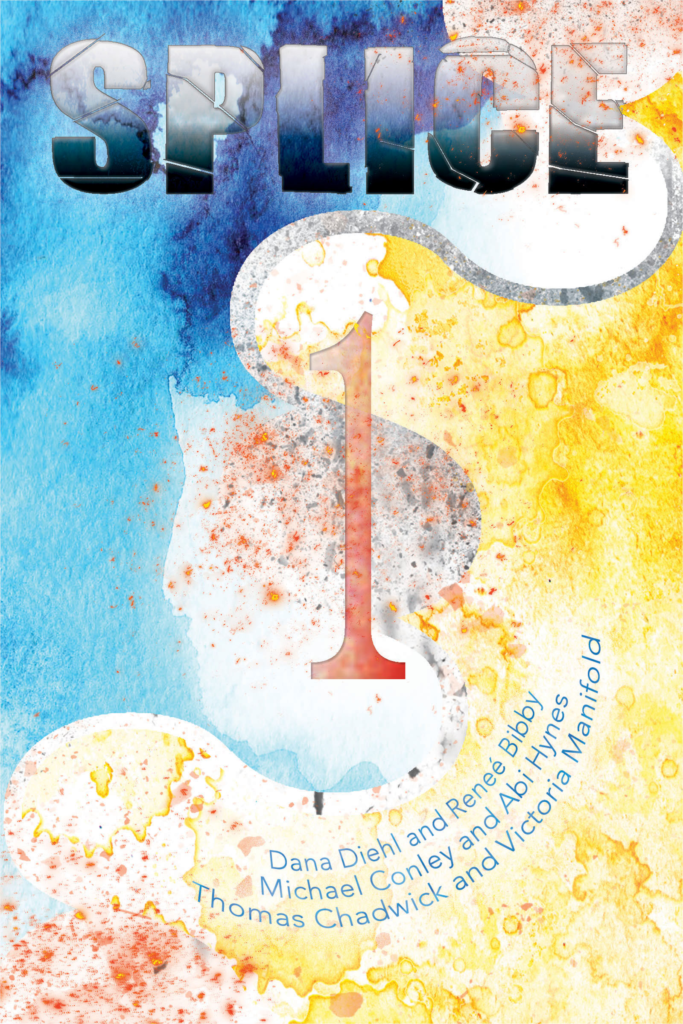
available in full in Splice #1.
Paperback: £9.99
ePub: £3.99
First, we feel we ought to recognise that the adjustment period has been difficult for both sides. We knew there would be challenges and we prepared for those as best we could, but there have also been difficulties we did not foresee. And we acknowledge that there were no plans in place where in hindsight we ought to have anticipated certain… eventualities. And this has caused suffering for all concerned.
Hind. Sight.
Yes. A wonderful thing, as they say.
What is—?
Oh, of course. My apologies. Hindsight. To, um — to look back, behind you, at the path that has brought you to this point. If we’d known then what we know now. We would have done things differently.
To look behind you.
Yes.
To look back.
At your hind legs?
Well.
I suppose so.
In a manner of speaking.
Okay.
Okay?
Nodding. We are nodding.
That we hear and understand what you are saying though not necessarily that we agree.
Yes?
Yes?
That is the correct way to mean the nodding?
It’s — yes, it’s a start. That we are listening and understanding each other — that’s an important start. I think we can agree on that!
We are nodding.
Okay, then.
So.
One of the things I think I should explain is that it was a shock to most of us when we arrived and saw you for the first time. In the flesh, as it were. You see, there was propaganda back home. We’d been told you were not so different from us.
And of course that’s true in some ways, we do have plenty in common.
But you see, at first sight…
They’d used the word — it’s offensive, I know, I see that now — but the messaging back home used the word humanoid, and that led us to think…
You thought we would be having legs.
It… It surprised us that you didn’t.
That you don’t.
Among… other things.
It was just a bit of a shock, really, and I think that — that shock — it frightened some of us, and that’s why some of us didn’t behave as we, they, ought to have done. But then of course — and I’m not making excuses for those initial settlers here — we must remember that this is the very first time two parties have tried to share a clean world. There were bound to be teething problems.
That we do not agree.
Our teeth are not a problem.
Well. Not for you, perhaps. But for us—
Our teeth are not a problem.
It’s…
It’s an expression. It’s an idiom, which… which… complicates things, I realise.
I’m sorry.
I mean simply to say that there were bound to be some problems.
To begin with.
Bound to be.
Inevitably.
To be.
Bound?
Well…
Look.
Perhaps — perhaps we — perhaps that’s where we should begin.
To be bound.
Boundaries. The bounds. Our territories, and the marking of borders.
It will not help, this marking.
We think it might.
If boundaries are to be enforced—
How is it you would enforce boundaries against us?
Enforce?
You said:
En.
Force.
Oh. I see.
I see the misunderstanding.
Look.
We’re not talking about anything involving actual physical force.
Quite the opposite, in fact. Boundaries can be maintained simply by mutual agreement.
Enforced without.
Without what?
Force.
Quite.
Well, yes.
Exactly.
Read ‘A conversation’ in full in Splice #1, our first anthology, available for purchase now.
About the Author
Abi Hynes is a drama and fiction writer. Her short stories have appeared in Litro, Interzone, and minor literature[s], and she was shortlisted for the Bath Flash Fiction’s ‘Novella-in-Flash’ Award in 2017. In addition to working in prose, she is also a playwright and screenwriter and is currently developing projects for TV.